AI that can be trusted, examined, and used responsibly.

Dr. Bukhari’s research spans trustworthy artificial intelligence, health AI, biomedical knowledge representation, FAIR and interoperable data, information retrieval, and health data science.

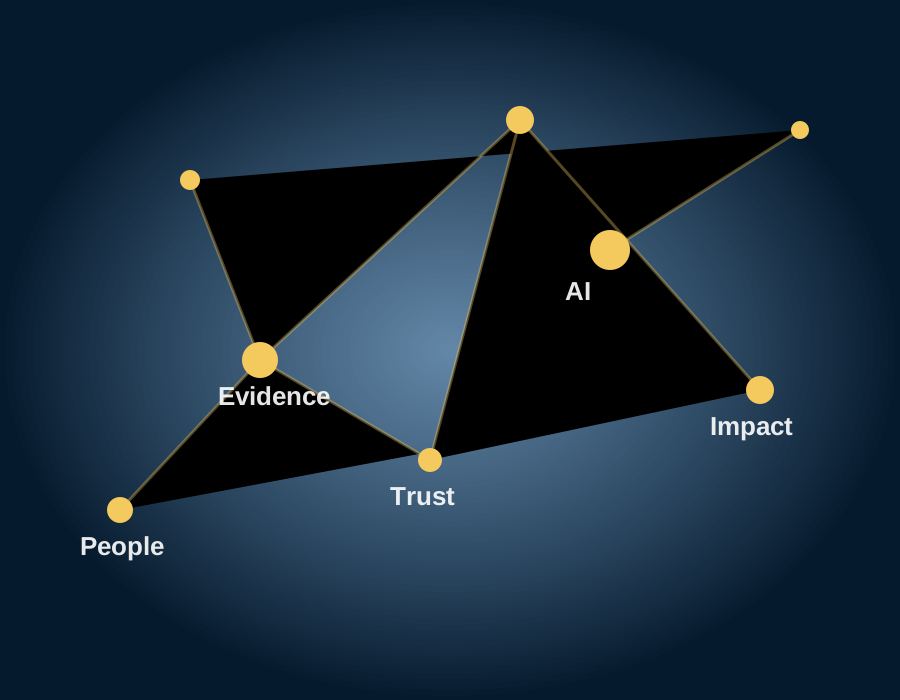
A network diagram connecting evidence, trust, artificial intelligence, and impact
Research systems designed to connect computational intelligence with evidence, expert review, and meaningful outcomes.

Research pillars

A human-centered approach to high-stakes computation.

The research agenda is organized around systems that are technically rigorous, clinically relevant, and transparent about how evidence is transformed into recommendations.

01Trustworthy Artificial Intelligence

Methods that prioritize explainability, accountability, privacy, fairness, robustness, and auditability across the AI lifecycle.

ExplainabilityAccountabilityPrivacyFairnessRobustnessAuditability
02Health AI and Clinical Decision Support

AI systems that help researchers and health professionals interpret complex clinical data without replacing human expertise or responsibility.

Clinical contextDecision supportHuman oversight
03Biomedical Knowledge Graphs

Graph-based representations that connect medical concepts, evidence, standards, and biological relationships for discovery and explanation.

Knowledge graphsOntologiesEvidence links
04FAIR and Interoperable Data

Semantic authoring, metadata standards, and reusable research infrastructure that improve scientific reproducibility and machine-actionable knowledge.

FAIR dataMetadata standardsInteroperability
05Biomedical Information Retrieval

Search, enrichment, and retrieval methods that make complex biomedical content easier to find, connect, and interpret.

Semantic searchContent enrichmentRetrieval
06Health Data Science

Machine learning and data-science methods for clinical outcomes, medical coding, digital health, and biomedical discovery.

Machine learningClinical outcomesMedical codingDigital health

Research philosophy

From evidence to responsible impact.

  1. 01Evidence

    Start with scientifically grounded data, domain knowledge, and clearly defined context.

  2. 02Computation

    Develop models and semantic systems that make relationships and assumptions inspectable.

  3. 03Human review

    Keep experts and affected communities central to evaluation and decision-making.

  4. 04Impact

    Translate results into safer, more transparent, and more useful research and healthcare systems.

Research in practice

Sharing methods, evidence, and results with research communities.

Selected moments from presentations and poster sessions in health AI and biomedical informatics.

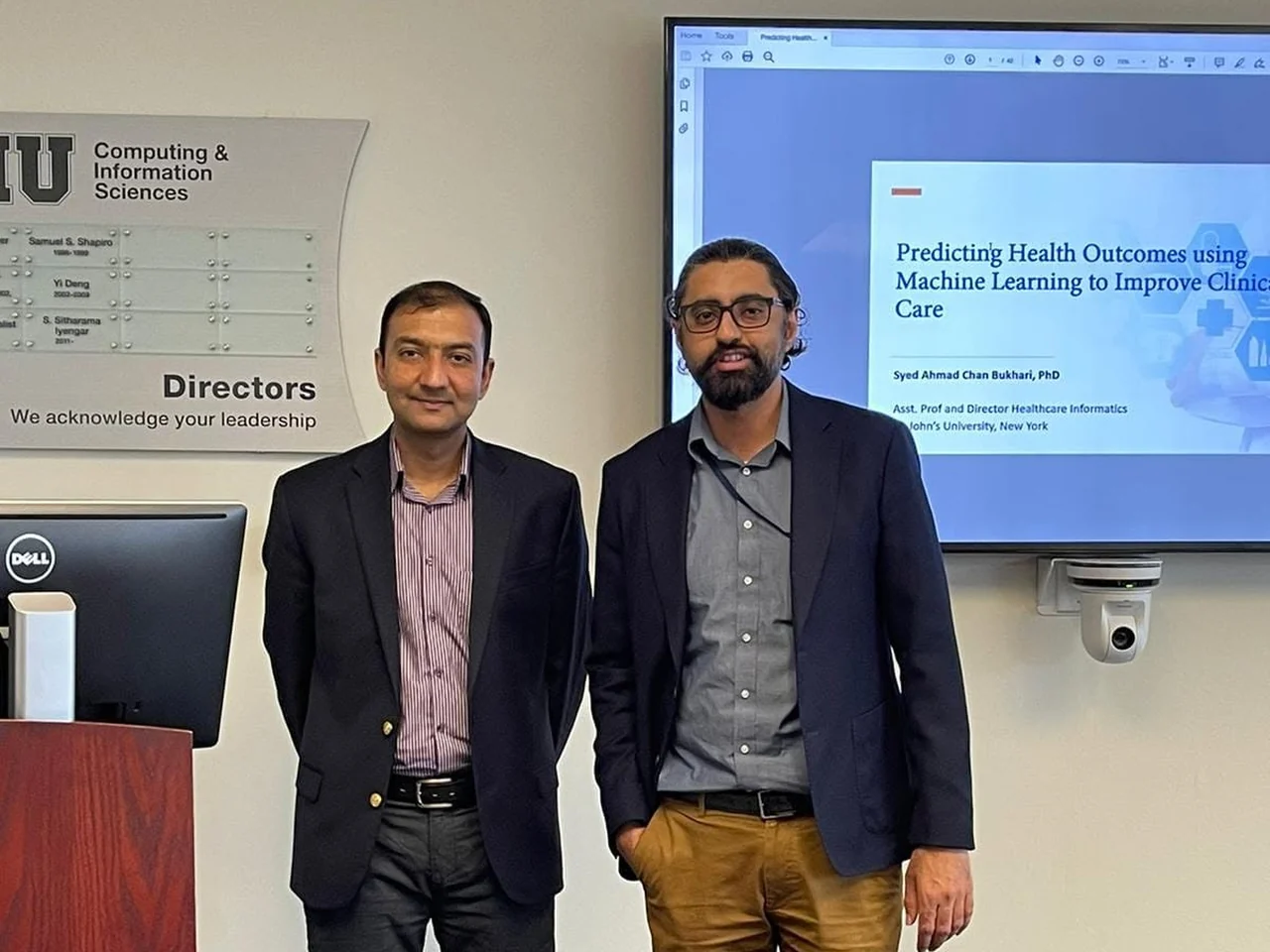
Dr. Bukhari standing with a colleague beside a presentation on predicting health outcomes with machine learning.
Presentation Machine learning for health outcomes and clinical care
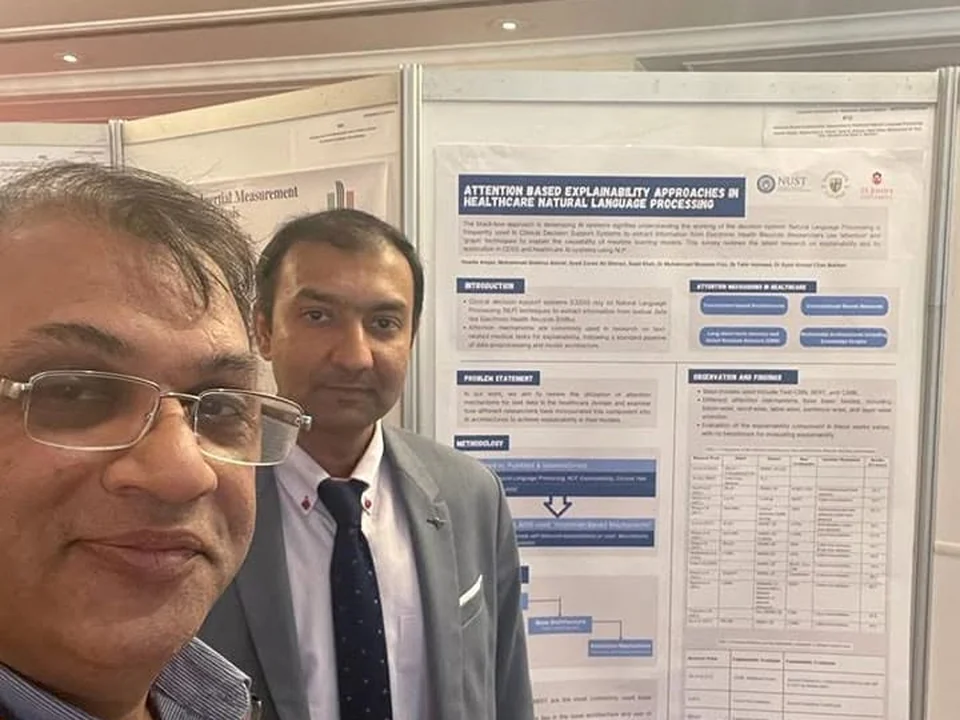
Dr. Bukhari and a colleague in front of a poster about attention-based explainability in healthcare natural language processing.
Poster session Explainability approaches in healthcare natural language processing

Active directions

Research programs connecting methods, evidence, and use.

Open each project to see how the technical approach supports reviewable and reusable outcomes.

Active funded project NIH-supported hybrid neuro-symbolic AI

RESPOND: drug repurposing for respiratory disorders.

A current initiative using machine learning and biomedical knowledge to identify existing medicines that may have new applications for serious respiratory diseases.

Explore the approach

The project examines relationships among drugs, diseases, genes, biological pathways, and other evidence, while emphasizing transparent scientific reasoning behind candidate recommendations.

Neuro-symbolic AIRespiratory disordersDrug repurposingEvidence graphs
Read the St. John’s project announcement →
NIH-supported · Three-year research initiative · Last reviewed August 4, 2026Source and funding
Active funded project NSF-supported clinical AI

Trustworthy medical coding and clinical code prediction.

AI methods that analyze clinical notes and support medical-code assignment while keeping accuracy, hierarchical validity, explainability, and human review in focus.

Explore the approach

The work includes knowledge-graph and hierarchy-aware approaches that connect clinical evidence to candidate codes and address the scale and rarity challenges of large coding systems.

Clinical NLPExtreme multi-label learningICD-10-CMExplainability
Read the St. John’s project announcement →
NSF-supported · Trustworthy clinical AI · Last reviewed August 4, 2026Source and funding
Ongoing research program Semantic biomedical infrastructure

Structured biomedical content and interoperable knowledge.

Research on semantic authoring, metadata standards, knowledge graphs, and reusable data infrastructure that improves discovery, interoperability, and reproducibility.

Explore the approach

This portfolio includes socio-technical biomedical content authoring, ontology-linked metadata, FAIR publishing, and standards-based infrastructure for human- and machine-readable research.

FAIR dataSemantic authoringMetadata standardsKnowledge graphs
Explore the Bukhari Lab research portfolio →
Standards and semantic infrastructure · Last reviewed August 4, 2026Source and funding

Selected scholarship

Representative publications and contributions.

View Google Scholar
Nature Immunology

Adaptive Immune Receptor Repertoire Community recommendations for sharing immune-repertoire sequencing data

Community recommendations for reporting and sharing immune-repertoire sequencing data.

Read publication →
Information Sciences

A socio-technical approach to trustworthy semantic biomedical content generation and sharing

A framework combining semantic technology, intelligent recommendations, collaboration, and expert validation.

Read publication →
BMC Bioinformatics

LinkedImm: a linked data graph database for integrating immunological data

A graph knowledgebase for integrating heterogeneous immunological data.

Read publication →